World War I

Medal of Honor Recipients from Wisconsin during World War I

Read here of the deeds of these brave heroes and do not forget them!
The names which are preceded by an asterisk denote posthumous awards.
This table lists the recipients by date, they are listed alphabetically below.
First Lieutenant Bronson, Deming
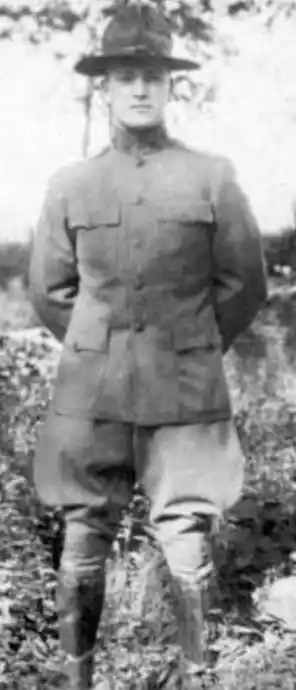
Born Rhinelander, Wisconsin; Entered service at Seattle, Washington
Company H, 364TH Infantry Regiment, 91ST Division, U.S. Army
Awarded for action near Eclisfontaine, France

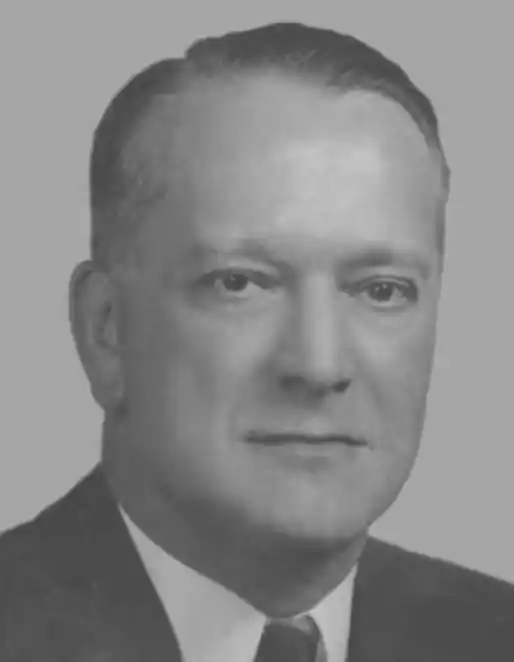
Rank and organization: First Lieutenant, U.S. Army, Company H, 364TH Infantry Regiment, 91ST Division.
Place and date: Near Eclisfontaine, France, 26-27 September 1918.
Entered service at: Seattle, Washington.
Born: 8 July 1894, Rhinelander, Wisconsin.
G.O. No.: 12 W.D., 1929.
Citation: “For conspicuous gallantry and intrepidity above and beyond the call of duty in action with the enemy. On the morning of 26 September, during the advance of the 364th Infantry, 1st Lt. Bronson was struck by an exploding enemy handgrenade, receiving deep cuts on his face and the back of his head. He nevertheless participated in the action which resulted in the capture of an enemy dugout from which a great number of prisoners were taken. This was effected with difficulty and under extremely hazardous conditions because it was necessary to advance without the advantage of cover and, from an exposed position, throw handgrenades and phosphorous bombs to compel the enemy to surrender. On the afternoon of the same day he was painfully wounded in the left arm by an enemy rifle bullet, and after receiving first aid treatment he was directed to the rear. Disregarding these instructions, 1st Lt. Bronson remained on duty with his company through the night although suffering from severe pain and shock. On the morning of 27 September, his regiment resumed its attack, the object being the village of Eclisfontaine. Company H, to which 1st Lt. Bronson was assigned, was left in support of the attacking line, Company E being in the line. He gallantly joined that company in spite of his wounds and engaged with it in the capture of the village. After the capture he remained with Company E and participated with it in the capture of an enemy machinegun, he himself killing the enemy gunner. Shortly after this encounter the company was compelled to retire due to the heavy enemy artillery barrage. During this retirement 1st Lt. Bronson, who was the last man to leave the advanced position, was again wounded in both arms by an enemy high-explosive shell. He was then assisted to cover by another officer who applied first aid. Although bleeding profusely and faint from the loss of blood, 1st Lt. Bronson remained with the survivors of the company throughout the night of the second day, refusing to go to the rear for treatment. His conspicuous gallantry and spirit of self-sacrifice were a source of great inspiration to the members of the entire command.” Citation from U.S. Army Center of Military History.
World War I Medal of Honor Recipient. He served during World War I (WWI) in the United States Army as a First Lieutenant in Company H, 364th Infantry, 91st Division. He was awarded the CMOH for his bravery near Eclisfontaine, France, on September 26-27, 1918. His citation reads “For conspicuous gallantry and intrepidity above and beyond the call of duty in action with the enemy.
On the morning of 26 September, during the advance of the 364th Infantry, 1st Lt. Bronson was struck by an exploding enemy handgrenade, receiving deep cuts on his face and the back of his head. He nevertheless participated in the action which resulted in the capture of an enemy dugout from which a great number of prisoners were taken. This was effected with difficulty and under extremely hazardous conditions because it was necessary to advance without the advantage of cover and, from an exposed position, throw handgrenades and phosphorous bombs to compel the enemy to surrender. On the afternoon of the same day he was painfully wounded in the left arm by an enemy rifle bullet, and after receiving first aid treatment he was directed to the rear.
Disregarding these instructions, 1st Lt. Bronson remained on duty with his company through the night although suffering from severe pain and shock. On the morning of 27 September, his regiment resumed its attack, the object being the village of Eclisfontaine.
Company H, to which 1st Lt. Bronson was assigned, was left in support of the attacking line, Company E being in the line. He gallantly joined that company in spite of his wounds and engaged with it in the capture of the village. After the capture he remained with Company E and participated with it in the capture of an enemy machinegun, he himself killing the enemy gunner. Shortly after this encounter the company was compelled to retire due to the heavy enemy artillery barrage. During this retirement 1st Lt. Bronson, who was the last man to leave the advanced position, was again wounded in both arms by an enemy high-explosive shell.
He was then assisted to cover by another officer who applied first aid. Although bleeding profusely and faint from the loss of blood, 1st Lt. Bronson remained with the survivors of the company throughout the night of the second day, refusing to go to the rear for treatment. His conspicuous gallantry and spirit of self-sacrifice were a source of great inspiration to the members of the entire command”. His Medal was awarded to him in 1929.
Major Whittlesey, Charles W.

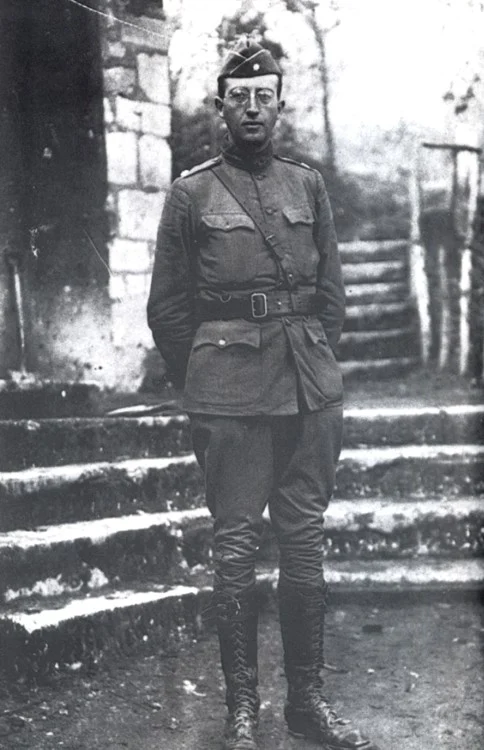
Born Florence, Wisconsin; Entered service at Pittsfield, Massachusetts
308TH Infantry Regiment, 77TH Division, U.S. Army
Awarded for action northeast of Binarville, in the forest of Argonne France
Rank and organization: Major, U.S. Army, 308TH Infantry Regiment, 77TH Division.
Place and date: Northeast of Binarville, in the forest of Argonne France, 2-7 October 1918.
Entered service at: Pittsfield, Massachussetts.
Birth. 20 January 1884, Florence, Wisconsin.
G.O. No.: 118, W.D., 1918.
Citation: “Although cut off for 5 days from the remainder of his division, Maj. Whittlesey maintained his position, which he had reached under orders received for an advance, and held his command, consisting originally of 46 officers and men of the 308th Infantry and of Company K of the 307TH Infantry, together in the face of superior numbers of the enemy during the 5 days. Maj. Whittlesey and his command were thus cut off, and no rations or other supplies reached him, in spite of determined efforts which were made by his division. On the 4th day Maj. Whittlesey received from the enemy a written proposition to surrender, which he treated with contempt, although he was at the time out of rations and had suffered a loss of about 50 percent in killed and wounded of his command and was surrounded by the enemy.” Citation from U.S. Army Center of Military History.
He commanded the famous ‘Lost Battalion’ of WWI.
Charles Whittlesey, the eldest of four children, was born in Florence, Wisconsin, into a middle class family in January 1884. While he was still young, the family moved to Pittsfield, Massachusetts, where he grew up and attended school. He graduated at the top of his class from Williams College in Williamstown, Massachusetts, where he was active in student leadership, an editor of the yearbook, and a contributor to two campus newspapers. He was a member of Delta Psi fraternity and was elected to the Gargoyle Society, an historic student organization whose purpose it is to promote “moral, intellectual, physical, and social growth” of the students and “improving the character of the school and its student body” (Williams College). He was popular with his peers who affectionately nicknamed “Count” and “Chick” and, even as a student, demonstrated the leadership characteristics that would serve him and his men in combat.
A Harvard Law School classmate of Theodore Roosevelt, Jr., Whittlesey graduated in 1908 and joined a New York City law firm. Three years later, however, he left the firm and went into private practice with his friend and classmate from Williams College, J. Bayard Pruyn. He later joined Theodore Roosevelt, Jr., at the Plattsburg Training Camp, a military camp in New York founded by General Leonard Wood and endorsed by former president Theodore Roosevelt, to prepare young men for the eventually of war. He completed his training in August 1916 and one year later was called to active duty and joined the American Expeditionary Force in Europe for World War I.
As a captain, Charles Whittlesey served with headquarters of the 308th Infantry Regiment, 77th Division in France. He was promoted to major in time to participate in the Meusse-Argonne, the largest, bloodiest American offensive of the war and is most famous for his role as commander of the so-called “Lost Battalion.” The name, however, is a misnomer, as it was neither a battalion nor was it lost.
The Lost Battalion consisted of two under-strength battalions in addition to two attached companies from the 307th Infantry. Captain George McMurtry, a veteran of the Spanish American War who rode with Teddy Roosevelt and the Rough Riders, was in command of the 2nd Battalion. Whittlesey was commander of the of the 1st Battalion of the 308th, but as the senior officer present, Whittlesey took command of the trapped units.
When given their orders for an offensive in the Argonne Forest in France, Whittlesey and McMurtry both claimed it was an impossible task for the two under-strength battalions. The dense forest had been held in German hands for nearly four years. It was known to be heavily fortified by German Forces with two lines of trenches, artillery, natural and man-made fortifications, and other strategic defenses.
The American regimental commander, however, ordered them to proceed regardless and Whittlesey replied, “All right, I’ll attack, but whether you’ll hear from me again, I don’t know” (Durr, 2018). The 1st and 2nd Battalions reached their objective through thick fighting but French and American units on both their flanks were stopped, allowing the Germans to surround Whittlesey and McMurtry’s units.
With inadequate means of communication – couriers, cables that could not run through the thick forest, and carrier pigeons – they were unable to communicate their position and were therefore presumed lost. In actuality, the unit was exactly where it was supposed to be. Eventually, located by air, they were misidentified as enemy forces and were fired upon by American artillery. Using the last of his eight carrier pigeons, Cher Ami (French for Dear Friend), Whittlesey sent the message, “We are along the road parallel 276.4. Our artillery is dropping a barrage directly on us. For heaven’s sake stop it” (Durr, 2018).
One of the couriers, captured by the Germans, was returned with a demand for surrender which Whittlesey rejected. The American press claimed Whittlesey had responded with the message, “Go to Hell!”. Whittlesey later denied this was true. Surrender must have been tempting – supplies of food and ammunition were low; he remained surrounded and no relief was in sight. American headquarters tried to relieve the burden by carrying out what is believed to be the United States’ first aerial re-supply mission. Food, supplies and ammunition were airdropped, but landed outside the perimeter and mostly fell into German hands.
After five days, the Germans were forced to fall back, and on the sixth day, approximately 190 men were able to walk out of the site. Casualties for the Lost Battalion numbered over 350 – killed, wounded and missing. For his leadership during the five days, now-Lt. Colonel Charles Whittlesey was awarded the Medal of Honor on December 24, 1918.
Charles W. Whittlesey receiving the Medal of Honor from Major General Clarence R. Edwards on Boston Common, Boston, MA, December 24, 1918.
After the war, Charles Whittlesey returned to his law practice and, later, found work with the Red Cross, as he tried to resume his old life. The difficulties he experienced in his transition back to civilian life were exacerbated by his notoriety as commander of the Lost Battalion and his hero status. Despite being vindicated by the military, he was criticized in the press for his decision to not surrender. The criticism and blame added to the difficulties he had in re-adjusting.
Public events and interview requests prevented him from moving forward and he was constantly reminded of his war experiences. He participated in filming a recreation of the Argonne forest battle, resulting in a 1919 silent film, The Lost Battalion, endorsed by the U.S. Government. In 1920, a former soldier from his command published an article about it which dredged up best-forgotten memories. But most damaging were all the soldiers from his command who appealed to him for support and advice for overcoming their own struggles. Today, we would say Whittlesey experienced Post Traumatic Stress (PTS).
Private Slack, Clayton Kirk

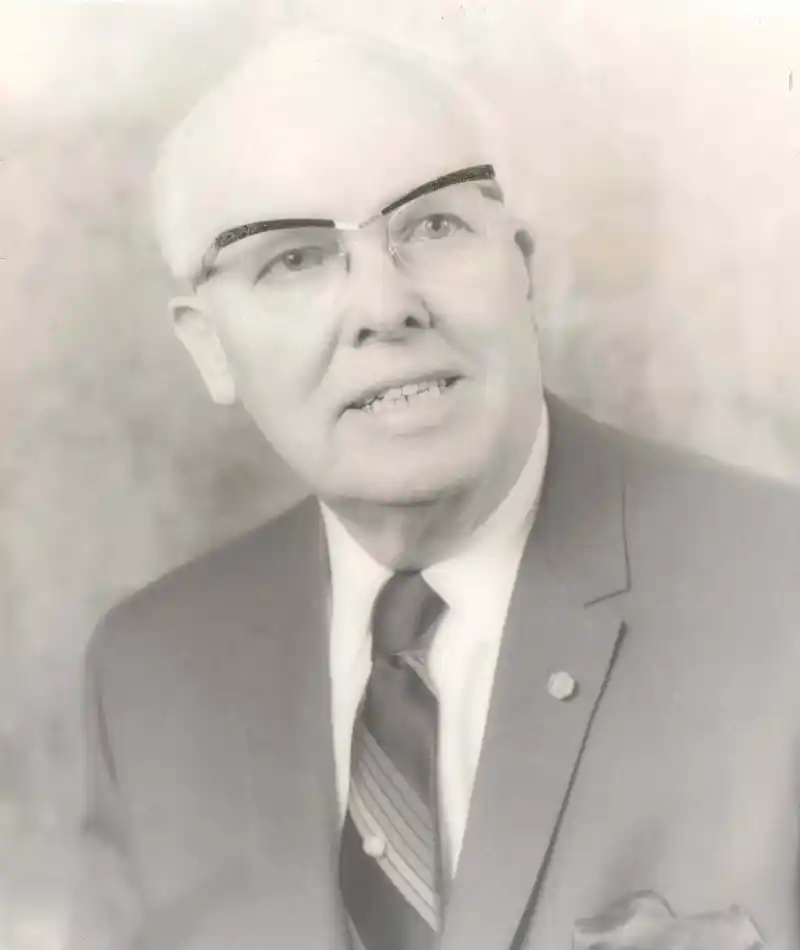
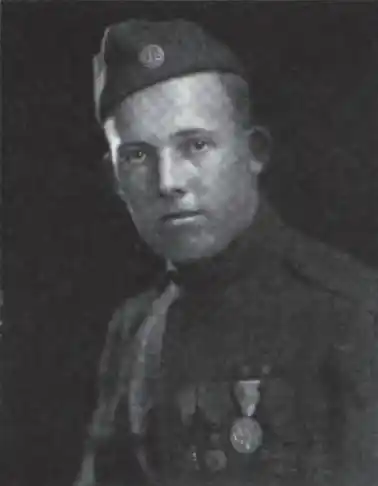
Born Plover, Wisconsin; Entered service at Madison, Wisconsin
Company D, 124TH Machine Gun Battalion, 33D Division, U.S. Army
Awarded for action near Consenvoye, France
Rank and organization: Private, U.S. Army, Company D, 124TH Machine Gun Battalion, 33D Division.
Place and date: Near Consenvoye, France, 8 October 1918.
Entered service at: Madison, Wisconsin.
Born: 23 February 1896, Plover, Wisconsin.
G.O. No.: 16, W.D., 1919.
Citation: “Observing German soldiers under cover 50 yards away on the left flank, Pvt. Slack, upon his own initiative, rushed them with his rifle and, single-handed, captured 10 prisoners and 2 heavy-type machineguns, thus saving his company and neighboring organizations from heavy casualties.” Citation from U.S. Army Center of Military History.
He entered the Army in September 1917. He was in show business after the war. He operated Slack’s Resort on Round Lake near Hayward ca. 1950s.
Slack was born in Plover, Wisconsin on February 23, 1896.[1]
Clayton Slack joined the United States Army from Madison, Wisconsin in September 1917.[2] He was assigned to the 33rd Division. He volunteered for machine gun duty and served with the Company D, 124th Machine Gun Battalion, 33rd Division.[3]
As a private, he was cited for single-handedly clearing out a German machine gun nest resulting in 10 prisoners and the capture of 2 machine-guns on October 8, 1918, in the Meuse–Argonne offensive, the biggest battle of World War I involving American troops.
Slack noticed several German troops and charged at them with his rifle and bayonet telling them to “put their hands up”. The German soldiers thinking that he was at the lead of a patrol, surrendered. Slack’s actions were credited with saving his unit heavy casualties.[1]
After the war, Slack toured the United States with war films and by the time of his death had met six presidents. In 1963, President John F. Kennedy hosted a reunion of Medal of Honor recipients at the White House for the 100th anniversary of the first presentation of the medal. Slack attended the function along with a number of other Medal of Honor recipients.
He died March 1, 1976, and is buried at Arlington National Cemetery Arlington, Virginia. His grave can be found in section 34, lot 59.[4]
Boatswain's Mate Second Class Siegel, John Otto

Born Milwaukee, Wisconsin
U.S. Navy
Awarded for action on the (U.S.S.?) Mohawk and the schooner Hjeltenaes
Rank and organization Boatswain’s Mate Second Class, U.S. Navy.
Born: 21 April 1890, Milwaukee, Wisconsin.
Accredited to: New Jersey.
Citation: “For extraordinary heroism while serving on board the Mohawk in performing a rescue mission aboard the schooner Hjeltenaes which was in flames on 1 November 1918. Going aboard the blazing vessel, Siegel rescued 2 men from the crew’s quarters and went back the third time. Immediately after he had entered the crew’s quarters, a steam pipe over the door bursted, making it impossible for him to escape. Siegel was overcome with smoke and fell to the deck, being finally rescued by some of the crew of the Mohawk who carried him out and rendered first aid.” Citation from U.S. Army Center of Military History.